Professional oral health care
What happens?
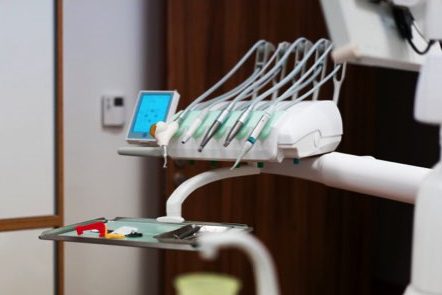
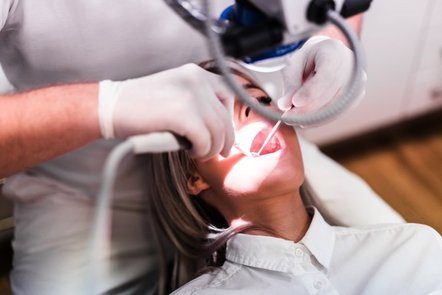
The dentist (or dental hygienist) will evaluate the patient’s oral cavity, explains how to properly and effectively brush teeth, answers questions and gives advice. Plaque and tartar are removed with special tools. An ultrasonic scaler is the tool a dentist uses to scrape the plaque and tartar off teeth. Its vibrating tip gently removes plaque from the tooth surface without causing damage to the tooth or causing pain. However, if the teeth are very sensitive or the procedure causes discomfort, local anaesthetics may be applied. For hard-to-reach places like between teeth, hand-held scaler may be used to remove tartar.
After the mechanical removal of plaque, we use the advanced and safe Airflow Tooth Polishing in our clinic. The Airflow works by mixing water and a special powder together with compressed air to remove the plaque. It is painless and gentle on your gum and teeth. Even deep pockets and interproximal spaces are easily reached. In addition, it is very effective in stain removal, helping your teeth back to their original colour. We can treat teeth stains from smoking, coffee and colouring foods. The non-toxic powder used in air polishing is also less gritty than in traditional polishing so it does not scratch the tooth surface. After the procedure, the teeth become noticeably lighter.
At the end of the procedure, the teeth are polished with brushes and polishing paste. The teeth become smooth and shiny. It takes longer for the plaque to build up on their surfaces.
You will be pleasantly surprised at the changes after this painless, fast and non-invasive method of cleaning. The surface of the teeth will become smooth and shiny, like glass. You will have a nice feeling of freshness and cleanliness. If you follow the advice of experts, your gums will not bleed. It is important that you see your dentist every six months. Patients with tendency of plaque accumulation and smokers should visit the dental hygienist 3-4 times a year.
Some tips:
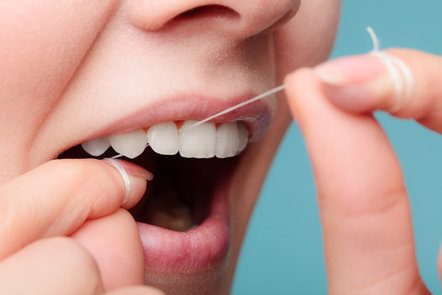
- Brush your teeth twice a day, one time is not sufficient for proper cleaning. Brushing should take at least 2-3 minutes.
- After each meal, chew gum for a few minutes or rinse your mouth with water to get rid of bits of food between the teeth.
- Avoid brushing with horizontal strokes across the teeth. Vertical or circular strokes will work better to remove plaque.
- Don’t forget to brush every surface of your teeth – the inside, outside, and chewing surfaces – as well as the gums.
- Consume dairy products – they are beneficial to the teeth due to calcium, which helps to restore the tooth surface affected by acid.
Contact us to book your appointment.
What our patients say
Partners


