Endodontics
Endodontic treatment is root canal treatment of the tooth. The tooth consists of a hard upper layer of enamel and dentin, and inside there is a nerve and blood vessels. If the tooth has deep carious lesions or cracks, or it has been treated improperly, the bacteria penetrate the tooth and the pulp is infected. The tooth becomes very sensitive to hot and cold food. Chewing or touching it may be painful. The tooth becomes grey. The gums get swollen and a bad toothache may occur. In some cases, endodontic treatment may be necessary even if there is no visible damage to the tooth or any symptoms. However, the infection may slowly damage the nerve without causing pain. It spreads through the root of the tooth to the surrounding bone and destroys it, causing the spread of inflammation.
Endodontic treatment may also be necessary for the root canals that have already been treated. This can happen if the root canals were poorly sealed, and bacteria have re-entered them. Inflammation can recur and spread beyond the tooth causing the bone lesion. In this case, root canal re-treatment is required – the old root filler is removed, everything is cleaned anew, sterilized and hermetically filled.
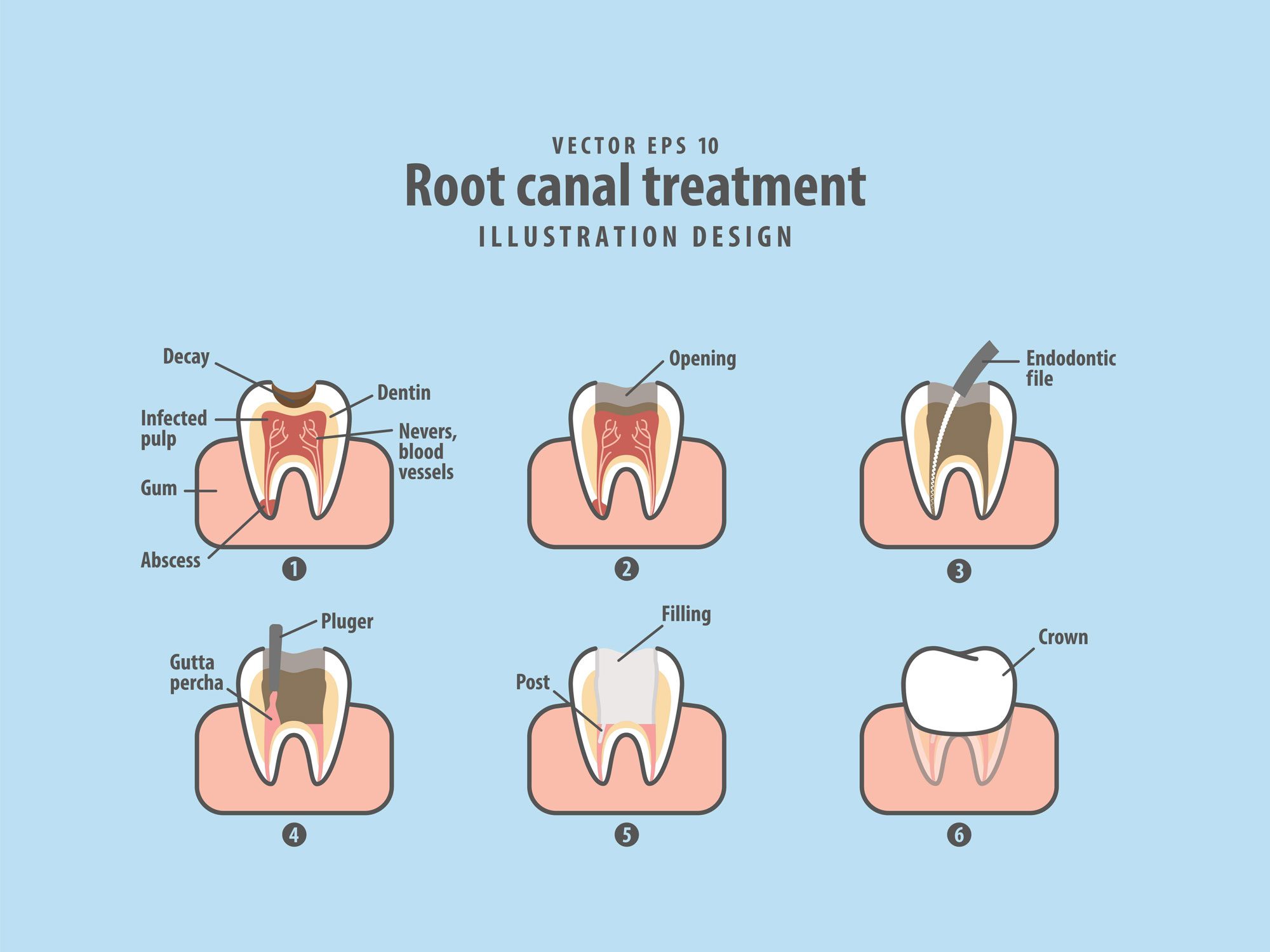
Endodontic Procedure:
- The endodontist examines and x-rays the tooth and decides whether endodontic treatment is necessary.
- The doctor administers local anaesthetic, so the procedure is painless.
- The doctor cleans the dental tissues damaged by caries to get the access to the internal cavity of the tooth.
- Very small instruments are used to clean the pulp and root canals. The doctor removes the diseased pulp. The cavity is disinfected.
- In case of infection the endodontist places the temporary filling with medicine. It stays there for at least a week. If necessary, it can be changed several times, therefore, it may take several visits.
- If the infection has not spread and the bone is not damaged, the dental canals can be immediately filled with material that seals them and prevents re-inflammation.
- Following root canal treatment a tooth-coloured filling or a crown is placed on the tooth to protect and restore it to full function.
- It may take 6 months or more after successful endodontic treatment to restore the inflamed bone. All other symptoms gradually disappear within a few days or weeks.
- In difficult cases, as well as in all cases of re-treatment, a microscope is used at the clinic. It allows you to see an enlarged and clearer image. This improves accuracy, helps to avoid possible complications and achieve excellent treatment results.
Our endodontist will answer any questions about these procedures you might have.
Contact us to book your appointment.
What our patients say
Partners


